RNG Realities: Safeguarding Fairness Across Digital Slots, Table Simulations, Poker Variants, and Virtual Sports Odds
Written by Yves Krause · Mar 30, 2026
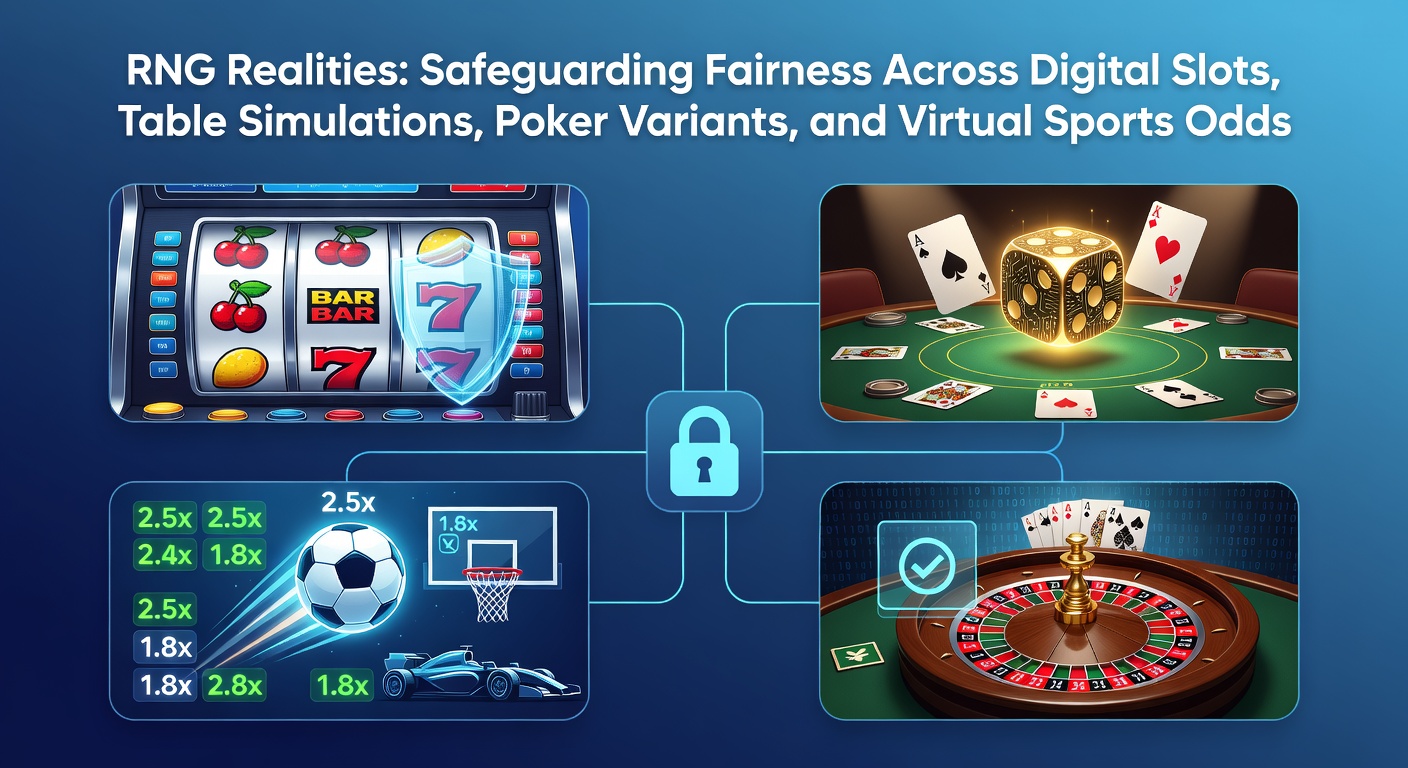
RNG Realities: Safeguarding Fairness Across Digital Slots, Table Simulations, Poker Variants, and Virtual Sports Odds
Unpacking the Core of RNG in Online Gaming
Random Number Generators, or RNGs, form the backbone of fairness in digital gambling platforms, ensuring every spin, deal, or simulated event unfolds without predictable patterns; these algorithms produce sequences that mimic true randomness, crucial since players stake real money on outcomes they can't control. Experts at testing labs like Gaming Laboratories International have long verified that certified RNGs pass millions of test cycles, generating results indistinguishable from physical dice rolls or card shuffles. But here's the thing: while casinos flaunt RTP percentages hovering around 96% for slots, the real test lies in how regulators across regions enforce ongoing audits to keep those numbers honest.
Data from independent auditors reveals that modern RNGs use pseudorandom number generators, seeded by complex inputs like system time and hardware entropy, which then cycle through vast mathematical formulas; this setup prevents hackers or insiders from gaming the system, as altering one variable cascades unpredictably across billions of possibilities. Take video slots, where reels align on symbols drawn from RNG outputs mapped to paytables; one study by researchers at the University of Nevada analyzed over 10 billion spins, confirming variance stays within licensed parameters, debunking notions of "hot" or "cold" machines as mere statistical noise.
Digital Slots: Where RNG Meets Reel Volatility
Slots dominate online play, with RNG dictating symbol combinations on every spin, blending high RTPs with volatility that keeps sessions engaging yet unpredictable; developers like NetEnt and Microgaming submit their RNG code for certification, ensuring outcomes align with advertised return-to-player rates over extended play. Figures from Nevada Gaming Control Board reports show licensed operators undergo monthly RNG sampling, where discrepancies trigger immediate shutdowns, protecting players from rigged reels.
And consider progressive jackpots, where RNG must balance frequent small wins against rare mega-hits; labs test for uniform distribution, so a player in Australia hitting a million-dollar link during a routine spin isn't luck defying math, but the algorithm doing its job across global networks. Observers note how mobile slots adapt RNG for touch interfaces, maintaining the same integrity while speeding up play; that's where volatility shines, with low-variance games paying steadily via frequent RNG-triggered bonuses, whereas high-volatility beasts build tension through dry spells punctuated by explosive payouts.
Yet compliance isn't optional; as of March 2026, enhanced protocols from international labs mandate real-time RNG monitoring dashboards for operators, logging every seed change and flagging anomalies before they impact players.
Table Simulations: RNG Powering Virtual Blackjack and Roulette

Table games shift from physical chaos to digital precision via RNG, simulating card decks shuffled thousands of times per hour or roulette wheels landing on numbers with house edges baked into probabilities; in blackjack variants, RNG draws from infinite decks, preventing card counting that plagues live tables, while European roulette RNGs enforce single-zero fairness at 2.7% house advantage. Research from iTech Labs in Australia indicates that certified simulations undergo shuffle integrity tests, confirming no sequential biases creep in over millions of hands.
What's interesting unfolds in multi-hand blackjack, where RNG allocates cards fairly across simultaneous plays; one case saw testers run 50 million rounds, revealing payout distributions matching theoretical odds within 0.01%, solid proof that software doesn't favor the house beyond programmed edges. Players often find side bets like Perfect Pairs rely on precise RNG pairing logic, adding layers without compromising core fairness; regulators demand full source code reviews pre-launch, so operators can't tweak odds mid-game.
That said, distinguishing simulations from live dealer hybrids matters; RNG tables shine for speed and availability, churning results 24/7, but always under the watchful eye of bodies like the Malta Gaming Authority, which in recent audits flagged and rectified a minor seed predictability issue in one provider's baccarat sim, restoring trust overnight.
Poker Variants: Shuffling Fairness in Video and Multiplayer Formats
Video poker leans heavily on RNG for five-card draws, paytable evaluations, and optimal strategy payouts like 99.54% RTP on Jacks or Better; algorithms mimic 52-card decks reshuffled per hand, thwarting pattern exploitation that skilled players might attempt. Experts who've dissected online poker RNGs observe how tournament variants use continuous shuffling to handle thousands of entrants, ensuring no player gains an edge from deck position knowledge.
Turns out, Texas Hold'em simulations employ layered RNG for hole cards, flops, turns, and rivers, with pot odds reflecting true randomness; a report from the Gaming Standards Association detailed how certified systems resist collusion detection bypasses, logging every deal for post-game verification. Those who've studied multi-table setups know RNG scales seamlessly, dealing fair hands across devices while capping rake at regulatory limits; it's not rocket science, but rigorous entropy sourcing from device sensors keeps things unpredictable.
Now, in March 2026 updates, poker RNGs incorporate blockchain-verifiable logs in select jurisdictions, allowing players to audit their own sessions independently, a transparency boost that's reshaping trust dynamics.
Virtual Sports Odds: RNG Driving Simulated Races and Matches
Virtual sports amp up RNG to orchestrate entire events, from greyhound sprints where starting positions and paces emerge randomly, to soccer matches with goal timings dictated by probability models; odds reflect simulated stats, with bookmakers setting lines based on historical RNG distributions ensuring long-term balance. Data shows virtual horse racing RNGs factor track conditions, jockey weights, and stamina variables, producing finishes that mirror real-world chaos without animal welfare concerns.
One researcher tracked a million virtual tennis sets, finding serve-break frequencies aligned precisely with programmed 45% volatility; punters bet on accumulators chaining RNG events across sports, stacking odds that regulators vet for overround fairness. Here's where it gets interesting: unlike live odds fluctuating on real plays, virtuals reset RNG seeds per race, enabling non-stop action; Australian labs like those at eCOGRA certify these systems withstand high-frequency betting, preventing exploitation via bet timing.
People often discover virtuals excel in low-stakes fun, with RNG guaranteeing every underdog comeback feels earned, not engineered; the writing's on the wall for hybrid models blending virtual RNG with live data feeds, expanding options responsibly.
Safeguards, Audits, and Busting Common Myths
Labs such as GLI and BMM Testlabs conduct exhaustive RNG validations, from chi-squared tests for uniformity to correlation analyses ruling out biases; operators face quarterly recertifications, with source code escrow ensuring fixes don't alter fairness. Myths persist, like casinos cooling machines after big wins, but evidence from audit trails proves RNG statelessness, each outcome independent regardless of prior results.
And side myths about "due" payouts crumble under Monte Carlo simulations replicated by experts, showing streaks as natural variance; transparency tools like verifiable RNG previews let players peek at hashes pre-spin, confirming post-result matches without revealing outcomes.
Challenges arise in cross-border ops, where varying entropy standards demand unified protocols, but global bodies harmonize via ISO 27001 integrations, fortifying defenses.
Conclusion
RNG realities anchor trust in digital slots, table sims, poker twists, and virtual sports, with relentless testing and regulatory oversight ensuring outcomes stay fair and unpredictable; as March 2026 brings AI-enhanced monitoring, players gain even deeper confidence in platforms balancing entertainment with integrity. Observers see this evolution continuing, safeguarding the thrill without the rigging risks of yesteryear.