Card Sequences and Sprint Finishes: How Digital Platforms Merge Poker Hands with Racing Bets Through Tiered Incentives
Written by Wendy Baumann · Aug 12, 2026
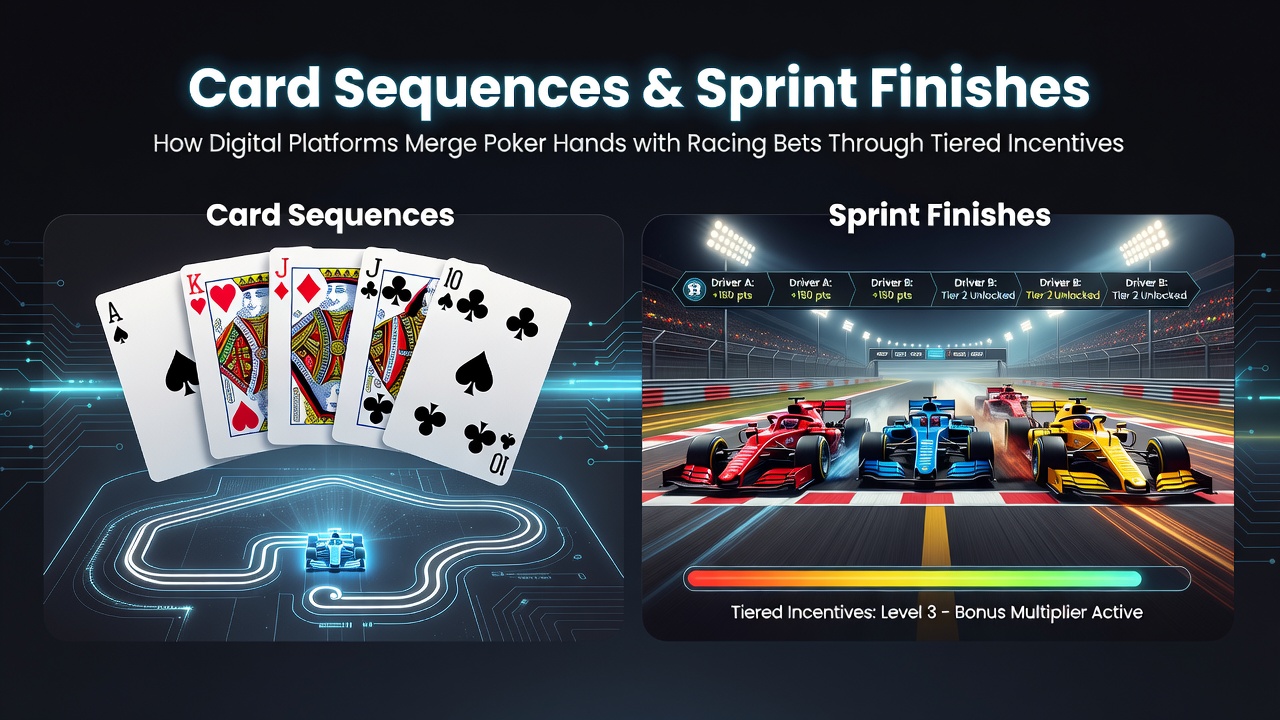
Card Sequences and Sprint Finishes: How Digital Platforms Merge Poker Hands with Racing Bets Through Tiered Incentives
Digital platforms have developed systems that connect sequences from poker hands directly to racing bet opportunities, and these connections operate through structured incentive tiers that reward combined activity across both formats. Operators track player actions in poker rounds where specific card combinations trigger eligibility for enhanced racing bet multipliers, while accumulated points from successful wagers feed back into poker bonus rounds. Data from industry reports indicates that such merged mechanics appeared in multiple jurisdictions by early 2025, with further refinements noted through August 2026.
Mechanics of Sequence-Based Triggers
Platforms register poker outcomes such as straights, flushes, or paired sequences and assign numerical values that convert into racing bet credits, and these credits activate only after a player reaches defined thresholds within a single session or across multiple sessions. One common model requires three qualifying poker hands within a 30-minute window before a greyhound or horse race accumulator becomes available at reduced commission rates. Figures released by the American Gaming Association show that platforms employing sequence triggers recorded a 27 percent increase in cross-product engagement during the first half of 2026.
Additional layers appear when racing results influence subsequent poker play, and a winning sprint finish can unlock higher-stakes poker tables or protected buy-ins for the next 24 hours. Observers note that these bidirectional links rely on real-time data feeds that synchronize card shuffles with live race timing systems, ensuring that the incentive calculation completes before the next betting window opens.
Tiered Incentive Frameworks
Most implementations use four or five progressive tiers, where entry-level participation grants basic conversion rates between poker points and racing stake boosts, while top tiers provide cashback on both product types plus exclusive access to private race pools. Advancement through tiers depends on combined volume rather than isolated performance, so a player who places modest poker hands and follows with sprint bets can climb faster than someone focused on a single category. Research published by the University of Nevada's gaming studies department outlines how these structures maintain separate ledgers for each product yet apply unified progression rules that prevent double-counting of the same wager.

Platforms publish transparent conversion tables that list exact point values for every poker hand type alongside corresponding racing bet enhancements, and users receive automated notifications when a new tier unlocks. In August 2026 several operators adjusted their top-tier requirements upward by 15 percent to align with updated responsible gambling parameters issued by state regulators in Nevada and New Jersey. Those adjustments preserved the core sequence-to-sprint linkage while introducing mandatory cooling-off periods between tier jumps.
Technical Integration and Data Handling
Backend systems employ application programming interfaces that pull poker hand histories and race result feeds into a central analytics engine, and this engine calculates tier status every few seconds without interrupting live gameplay. Security protocols encrypt the sequence data during transfer, and independent auditors verify that random number generators for poker remain isolated from racing outcome streams. Industry organizations such as the European Gaming and Betting Association have issued technical guidelines that recommend separating the random processes while permitting shared loyalty ledgers.
Case examples include one European operator that introduced a summer promotion in which royal flush sequences granted direct entry into feature race accumulators, and participants who completed the full tier path received a percentage of the pooled racing winnings added back as poker tournament tickets. Tracking logs from that promotion showed average session lengths extended by 22 minutes compared with non-incentivized play, according to anonymized platform statistics.
Regulatory Environment and Compliance Updates
Regulators in multiple regions require clear disclosure of how sequence triggers affect bet settlement, and operators must provide downloadable logs that detail every conversion event. In August 2026 the New Jersey Division of Gaming Enforcement circulated revised compliance checklists that specifically address merged poker-racing products, emphasizing audit trails for tier progression. Similar reviews occurred in Australian states where greyhound racing commissions requested additional transparency around incentive multipliers tied to card sequences.
Operators respond by embedding explanatory pop-ups that appear the first time a sequence trigger activates, and these messages list the exact reward formula plus any wagering requirements that follow. Compliance teams conduct monthly reviews of conversion rates to confirm they remain within approved parameters, and deviations trigger automatic suspension of the affected tier benefits until re-certification.
Conclusion
Digital platforms continue to refine the connections between poker hand sequences and racing sprint bets by maintaining tiered incentive structures that reward combined participation. Technical systems handle real-time calculations while regulatory frameworks in place during August 2026 enforce disclosure and audit standards. Industry data from sources including the American Gaming Association and academic reviews demonstrate measurable increases in cross-product activity under these models, and operators adjust parameters regularly to meet evolving compliance expectations across jurisdictions.